Pages

Showing posts with label India. Show all posts

Monday, July 8, 2013

India Planning Half Billion Dollar Boost to Rural Phone Coverage

India Planning Half Billion Dollar Boost to Rural Phone Coverage

Mobile phone coverage in rural India is set to get a boost with a Rs3,00 crore (US$490 million) commitment from the Universal Service Obligation Fund (USOF).
The investment, which has been reportedly approved by the Telecom Commission will expand mobile coverage to around 56,000 villages, including those along the Bangladesh and Chinese borders were coverage has sometimes been restricted due to security issues.
"The project will involve the rollout of nearly 20,000 towers, and the USOF will take a call on whether to extend viability gap funding (VGF) or subsidise both capex or opex elements of the project since private operators are averse to investing in mobile coverage in these regions," an unnamed senior DoT official told the Economic Times newspaper.
The roll out is due to take place by next March.
India's USOF is based on a levy on the mobile networks equivalent to 5 percent of their annual revenues and has been building up since 2002. It has come under recent criticism from the GSMA though, as the fund now has a surplus of around US$4 billion that has not been spent.
On the web: Economic Times


Thursday, July 4, 2013

Bharti Airtel Lifts Stake in Qualcomm's BWA License Holders

Bharti Airtel Lifts Stake in Qualcomm's BWA License Holders

Bharti Airtel already owned a 49% stake in the Qualcomm subsidiary after paying US$165 million last May, and in a short statement to the stock exchange announced that it has lifted its stake to 51 percent, giving it control of the holding company that owns the licenses..
With this the holding companies that own the four licenses are now subsidiaries of Bharti Airtel.
Qualcomm's licenses cover Delhi, Mumbai, Haryana and Kerala, while Bharti has BWA licenses in four circles - Kolkata, Karnataka, Punjab and Maharashtra - and 3G licenses in thirteen circles in India.
Qualcomm paid just over US$1 billion for the licenses in the auctions of 2010, but has struggled to finalise their handover from the government, with final approval only being granted in early 2012. The company said at the time of bidding for the licenses that it would roll out a 4G network then sell the company.


India’s Telecom Commission backs full foreign ownership


India’s Telecom Commission backs full foreign ownership


India’s Telecom Commission, part of the country’s DoT (Department of Telecommunications), has proposed 100 per cent foreign direct investment (FDI) in the country’s telecoms sector according to The Economic Times.
Under current rules, foreign investors are limited to 49 per cent equity via the “automatic route” but can bump that up to 74 per cent if the Foreign Investment Promotion Board (FIPB) gives approval.
Should the Telecom Commission’s proposals be ratified, it would enable India’s foreign players to buy out their partners and raise money for the country’s telecoms sector.
“Experts” quoted in The Economic Times said the loosening of FDI rules could attract close to $10 billion worth of investment in the long term. The sector, according to the report, has attracted around $13 billion worth of FDI since early 2000.
Foreign players with investment in Indian operators include Maxis Communications (Aircel), Telenor (Uninor), SingTel (Bharti Airtel), Sistema (Sistema Shyam Teleservices) and Vodafone (Vodafone India).
Both Russia’s Sistema and Norway’s Telenor, quoted by The Economic Times, welcomed the proposed change in FDI rules.
Coinciding with the Telecom Commission’s proposals, Telenor announced the Indian government had given it the green light to raise its stake in its Telewings joint venture (which operates under the Uninor brand) from 49 per cent to 74 per cent. Telenor had gained FIPB approval to raise its stake on 14 June.
According to the International Business Times, Telenor will pump around $170 million into India’s telecoms sector as a consequence of raising its stake.
In another reshuffling of telecom ownership in the country, Bharti Airtel announced on 4 July it had become the majority shareholder in its wireless broadband joint venture with Qualcomm by increasing its stake by 2 per cent. Bharti now holds 51 per cent and Qualcomm 49 per cent.
Bharti Airtel said the four separate entities that are part of the broadband venture have become its subsidiaries after the stake increase.
No financial details of the transaction were disclosed.

Wednesday, July 3, 2013

China will be leader in Smartphone Markets by 2018

BRIC: Four of the Top Seven Smartphone Markets in 2018 As China Surpasses the US in 2013
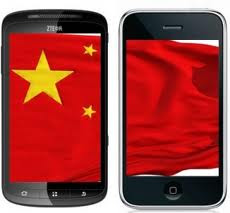
China will displace the US as the largest smartphone market in 2013. Brazil and India are also forecasted to be in the top four countries for smartphone shipments by 2018. Smartphone vendor interest and the strategies of the smartphone value chain are shifting accordingly.

ABI Research forecasts that Russia will come in as the 11th largest smartphone market in 2013 and will climb to 7th in 2018. "With room to grow, the emerging BRIC nations are displacing established markets such as the US and Japan as market leaders in terms of smartphone shipments," stated senior analyst, Michael Morgan.
ABI Research forecasts that the top five countries in 2018 will account for 51% of worldwide smartphone shipments while the BRIC countries will account for 33% of smartphone shipments.
By 2018, Western Europe and North Americas' share of smartphone shipments will be 33% (equal to BRIC) down from 39% in 2013. It is clear that the growth of the smartphone market over the next five years will depend on operators and handset OEMs delivering optimized and price appropriate solutions to the BRIC consumers.
In terms of total handset shipments, the BRIC countries are already in the top five, but have lagged in their global smartphone share. ABI Research notes that over the past two years, Android paired with low cost hardware has opened the door to increasingly lower ASPs for smartphones.
"When you look at operating system share in emerging markets, you tend to find that Android has been busy fulfilling its mission to bring the Internet to consumers who can't afford a traditional PC or Laptop," added senior practice director, Jeff Orr.

Tuesday, July 2, 2013

Vodafone Offers to pay more for renewal of licenses

Vodafone Offers $680 Million to Renew Indian Licenses

 Vodafone's Indian operations has offered to pay Rs40 billion (US$680 million) to settle a dispute over the renewal of its licenses in Delhi, Mumbai, and Kolkata.
The government refused to automatically renew the licenses when they expired, and wants to sell off the spectrum in an open auction. However, Vodafone argues that the licenses include a clause permitting automatic renewal, at an agreed price.
Citing a letter sent to the Department of Telecoms, the Wall Street Journal said that Vodafone made the unsolicited offer of US$680 million to try and settle the dispute.
Vodafone had cited clause 4.1 of the license that was granted to it in 1994 which allows for a 10-year extension on mutually agreed terms if the mobile network makes the request during the 19th year of its license.
Vodafone filed the application at the end of last year, and has since filed a lawsuit seeking enforcement of the license conditions.
On the web: Wall Street Journal

Friday, June 28, 2013

India Became the World's 3rd Largest Smartphone Market in Q1 2013

India Became the World's 3rd Largest Smartphone Market in Q1 2013


India overtook Japan to become the world's third largest smartphone market by volume for the first time ever in Q1 2013. Samsung, Micromax and Apple are among the major brands leading the Indian smartphone market, according to Strategy Analytics.
Linda Sui, Analyst at Strategy Analytics, said, "We estimate 10.0 million smartphones were shipped in India during the first quarter of 2013, almost tripling from 3.8 million units a year earlier. India overtook Japan to become the world's third largest smartphone market by volume for the first time ever in Q1 2013, following China and the United States."
Neil Shah, Senior Analyst at Strategy Analytics, added, "India is growing four times faster than the global average. Worldwide smartphone shipments expanded 39% year-over-year, compared with 163% YoY across India, during Q1 2013. The Indian smartphone market is rising quicker than China (86% YoY), Japan (24% YoY), the US (19% YoY) and almost all other major countries."
Neil Mawston, Executive Director at Strategy Analytics, added, "India is the new China. India is a low-penetration, high-growth market that no smartphone vendor, component maker or apps developer can afford to ignore. Key brands driving the smartphone boom in India include foreign firms such as Samsung and Apple. But it is domestic players who are seeing the fastest growth. For example, we estimate Micromax, Karbonn and Spice are growing between 200 and 500 percent on an annual basis."

India and Global Smartphone Shipments in Q1 2013

Global Smartphone Shipments (Millions of Units) Q1 '12 Q1 '13
India 3.8 10.0
Rest of World 150.0 203.9
Total 153.8 213.9
Global Smartphone Shipments % of Total Q1 '12 Q1 '13
India 2.5% 4.7%
Rest of World 97.5% 95.3%
Total 100.0% 100.0%
Global Smartphone Shipments Growth : Year-over-Year Q1 '12 Q1 '13
India ~ 163.2%
Rest of World ~ 35.9%
Total ~ 39.1%


Monday, June 24, 2013

Nokia begins latest Asha sales


Nokia is this week beginning sales of its Asha 501 device, the first powered by the vendor’s new Asha Platform, which will be available at a sub-$100 price point. The new handset will be available initially in Thailand and Pakistan, with India “soon to follow”. It will subsequently rollout across Europe, the Middle East and Africa, Asia Pacific and Latin America. Nokia previously said it expects to sell 100 million of its “new generation Asha” devices in the future. The launch comes at a point when the company is facing fierce competition from a number of low-cost Android smartphone makers targeting emerging markets. Asha 501 has a 3-inch touch screen, includes Wi-Fi and Bluetooth, and will be available in both single and dual-SIM versions. It also has a 3.2 megapixel camera. The device lacks 3G support. It has two main screens: Home, which offers a traditional application launcher, and Fastlane, which “adapts to display recent activity on the phone as well as upcoming events”, and integrates with Facebook and Twitter. It also includes Nokia’s Xpress Browser, which compresses data by up to 90 per cent.

Thursday, June 20, 2013

SAARCFINANCE, Asian Clearing Union meetings conclude: Pakistan assumes ACU chair

SAARCFINANCE, Asian Clearing Union meetings conclude: Pakistan assumes ACU chair Mr. Yaseen Anwar, Governor, State Bank of Pakistan hosted the 26th SAARC FINANCE, Group Meeting, 9th Governors’ Symposium, and 42nd Asian Clearing Union, Board of Directors Meeting, at a local hotel in Islamabad. Dr Fazeel Najeeb, Governor and Chairman, Maldives Monetary Authority chaired the SAARCFINANCE Group Meeting whereas SAARCFINANCE Governors’ Symposium was chaired by the Governor State Bank. Pakistan also assumed chair of the ACU, hence Governor SBP, Yaseen Anwar chaired the 42nd ACU Board of Directors meeting as well. Some key decisions were taken in the SAARCFINANCE Group Meeting, including: 1. SAARC FINANCE 10-year history folder portal was launched. The portal is a systematic collection and compilation of information on SAARC FINANCE activities. The portal will also post details of important policy decisions made on SAARC FINANCE fora, and will create institutional memory. 2. To start off the SAARC scholarship scheme, Reserve Bank of India has offered one scholarship per year to an applicant from SAARC region. The focus of the Governors’ symposium was to gauge the impact of the Euro Debt Crisis on the SAARC region. To complement the country specific presentations, two key-note speakers, Dr Ishrat Husain (Ex- Governor SBP) and Dr Ehtisham Ahmad (Ex-IMF, now fellow with the University of Bonn), set the framework for the country specific presentations. In his introductory comments, Governor Yaseen Anwar gave a comprehensive, yet concise timeline of the series of events that have created the challenging economic conditions in Europe. He highlighted how the loss of risk appetite after the US mortgage crisis in 2007/08, triggered the stresses that heavily indebted peripheral European countries currently face. Although, Governor Yaseen Anwar acknowledged some adverse impact on Pakistan via European export demand and foreign investment, he concluded that Pakistan has largely been insulated from the fallout of the Euro Crisis. Dr Ishrat Husain, echoed Governor Yaseen’s assessment, but extended the view to capture the entire SAARC region. Criticizing the assumption that a common currency would bring ‘endogenous convergence’, Dr Ishrat said that instead of addressing their fiscal divergence, easy Euro financing allowed countries to ignore their fiscal problems and live beyond their means. He concluded with the view that the problems in South Asia are similar and domestic in nature. Dr Ehtisham Ahmad built on Dr Ishrat’s talk, by highlighting the role of standardized information to gauge whether EU member countries were in fact complying with the spirit of the convergence criteria that created the Euro. Dr Ehtisham said that fiscal rules do not work without a credible system of rewards and / or sanctions. He also admitted that the IMF had understated the cost of austerity, and stressed the need for a BRIC Bank that would provide long-term funding to developing countries. He ended with two questions; can currency arrangements be credible without credible reward/sanctions? And, do currency unions have to evolve towards full fiscal federation to operate efficiently? During country presentations, India, Maldives and Afghanistan explained how the Euro crisis has hurt their economies; while Nepal, Bangladesh and Pakistan claimed their economies were largely insulated. Sri Lanka was in between the two groups. The adverse impact varied: for India, the vulnerability was the confidence channel; whereby negative news from the Eurozone would make foreign investors in India more cautious; in the Maldives, the reduction in European tourists was much worse than had been anticipated; and in Afghanistan, aid flows from Europe were interrupted. Despite the mixed picture, all countries agreed that common challenges of a domestic nature dominate the SAARC region. As spelled out by Dr Mushtaq Khan (SBP) low tax revenues; inadequate power ; falling FDI; the need to enhance productivity; governance and corruption, have taken a bigger toll on the region than the Euro crisis. Governor, Reserve Bank of India, Dr Subba Rao raised an important point about how debt sustainability is strongly linked to the tax-to-GDP ratio in the context of repayment capacity. Although India’s ratio is currently 19%, Governor Dr Subba Rao felt this ratio needs to increase to 22%. The Pakistani representatives agreed with his assessment, and urged policy makers to take urgent steps to increase the tax-to-GDP ratio in Pakistan to escape the domestic debt trap. During the ACU/SAARC events, SBP Governor Yaseen Anwar assumed the Chair of the Board of Directors of ACU during the 42nd Meeting of the Board. The Governors/Deputy Governors of central banks of Bangladesh, Bhutan, India, Iran, Maldives, Myanmar, Nepal, Pakistan, and Sri Lanka participated in the meeting. One of the primary objectives of the establishment of the ACU is to promote monetary co-operation amongst the participants, and develop a closer relationship between their respective banking systems. This would then contribute to the expansion of trade and economic activity, within the ACU region. In his inaugural address the Governor SBP said that in today’s scenario, economic cooperation among the participants of the ACU is needed more than ever. The expansion of intra-regional trade and cooperation on other fronts, among ACU member countries will help absorb any further negative shocks in the global markets. With an increase in trade amongst ACU countries, and an integrated financial system that reduces the cost of trade, the countries of the ACU will be able to diversify their trade and tap into some of the fastest growing markets of the region. ACU Board of Directors Governors’ Symposium ACU Board of Directors and other participants